
Connecting the Dots · Part 6 of 6 · The Interface needs to be own
Connecting the Dots – Part 6: Instrumentation Interfaces with Vendor Package Units (Mechanical) Engineering
Successful process plant engineering depends on effective coordination between Instrumentation and other engineering disciplines. As part of this technical article series, Connecting the Dots: Instrumentation Interfaces with Other Engineering Disciplines, Ryka Engineering Solutions explores critical engineering interfaces, common design and coordination challenges, their impact on project execution, and practical approaches to achieving integrated, efficient and reliable engineering solutions for process industries.
Introduction-
6. Instrumentation ↔ Vendor Package Units (Mechanical): The Interface needs to be own
Package units such as compressors, pumps, chillers, and boilers etc. are generally handled by the Mechanical discipline, requiring close coordination with Instrumentation. These packages bring their own instrumentation, wired and configured by the package vendor, into a plant with its own control philosophy. This interface is often resolved late due to delayed vendor responses or a lack of clarity arising from limited instrumentation engineering expertise at the vendor’s end.
What goes wrong:
- Package vendors often follow their standard instrumentation practices, which may not align with the plant’s alarm philosophy, junction box (JB) grouping, cable segregation, instrument selection criteria, or overall project design basis. For example, vendors may use switches instead of transmitters or select flange ratings based on their standard practices rather than project-specific requirements and design conditions.
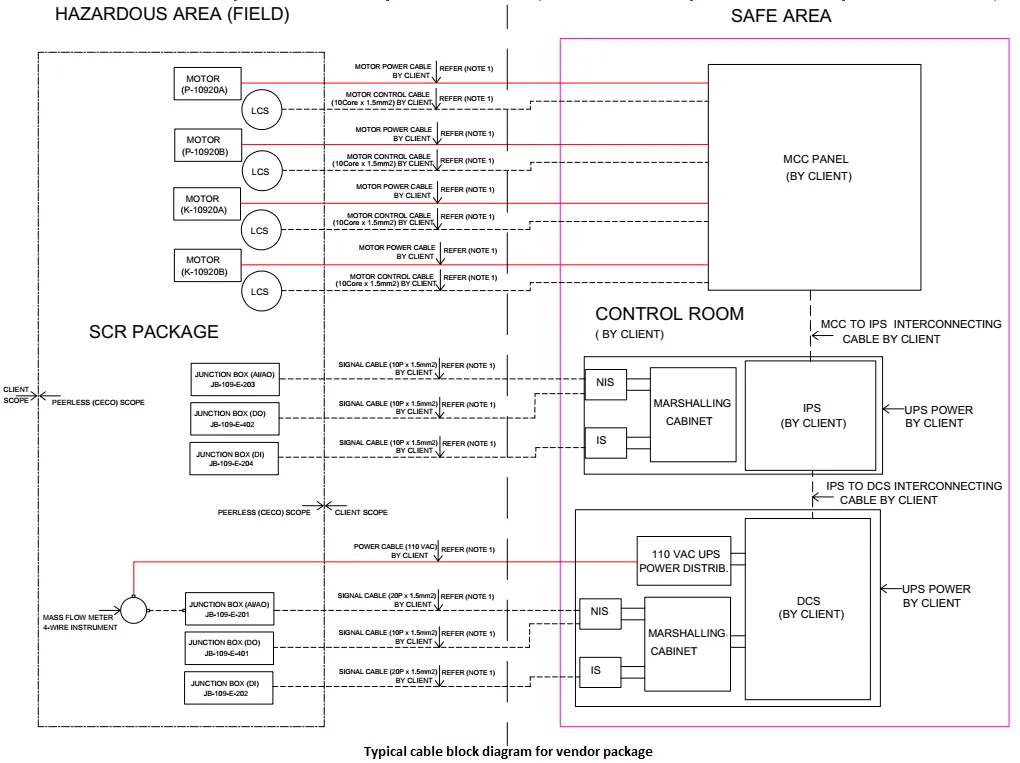
- The decision on which signals are hardwired to the plant DCS/SIS versus which are handled over a serial/fieldbus link to the package PLC is often left open until FAT (Factory Acceptance Test), by which point the package logic is already built.
- Tag naming conventions used by the vendor don’t match the plant’s tag numbering philosophy, requiring a mapping exercise during commissioning instead of during design.
- SIL-rated trips that involve both plant and package instrumentation (e.g., a compressor trip requiring plant-level signals) are not clearly allocated between the vendor’s safety system and the plant’s SIS, creating ambiguity about who owns the safety function.
Why it happens: Package units are often procured based on performance specifications, leaving detailed instrumentation and control system design to the package vendor. Even when project-specific instrumentation and control design basis are provided, vendors may deviate from them to suit their standard manufacturing practices. In some cases, the package vendor may also lack the necessary instrumentation engineering expertise to fully comply with project specifications.
Cost impact: Late-stage signal reallocation and deliverable submissions by package vendors, re-work of PLC/DCS configuration discovered at FAT or SAT, and in the worst case, safety function allocation disputes that surface during HAZOP or SIL verification close-out, close to the commissioning schedule.
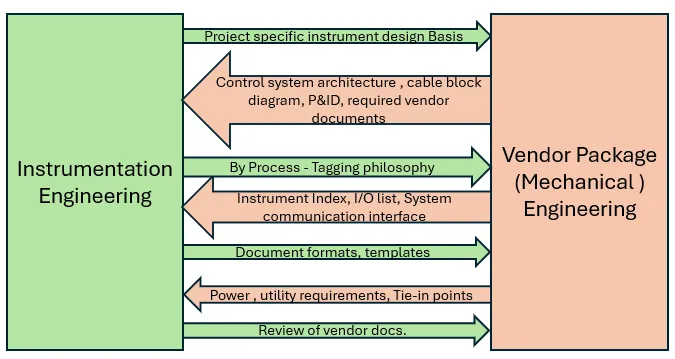
How to close the gap: Issue a detailed Instrumentation Design Basis for Package Units, along with standard document formats, to every package vendor during the pre-order stage only. During technical evaluation, obtain key documents, including basic architectures, control schemes, utility requirements, P&IDs, instrument index, and bill of materials. Thoroughly review these documents jointly with the vendor at the approval stage, before the design is frozen, to ensure alignment with project requirements.
Conclusion
In detailed engineering, many costly errors originate not within individual disciplines, but at the interfaces between them. A nozzle dimension not communicated in time, an instrument requirement overlooked or misunderstood, or an unresolved signal interface can trigger design changes, rework, and project delays.
Basic communication discipline is equally important. Clear, relevant email subject lines, timely acknowledgement of inputs and changes, and proper email management help ensure that critical information is communicated, tracked, and acted upon without delay.
The solution lies in treating discipline interfaces as critical engineering deliverables, not merely coordination activities. Early identification of interface requirements, clearly defined responsibilities, timely exchange of design inputs, and joint reviews at the right milestones are essential to achieving this.
When engineering interfaces are addressed proactively, engineering becomes more integrated, execution more predictable, and commissioning smoother.
Successful projects are built when every discipline works in synchronization, turning engineering interfaces into connections that drive quality, efficiency, and seamless project execution.
At Ryka Engineering Solutions, we believe great engineering connects disciplines, seamless interfaces build confidence, and effective collaboration delivers project success.
हर कड़ी का अपना महत्व, हर जोड़ का अपना मान,
मिलकर जब सब काम करें, तभी बने उत्कृष्ट निर्माण।