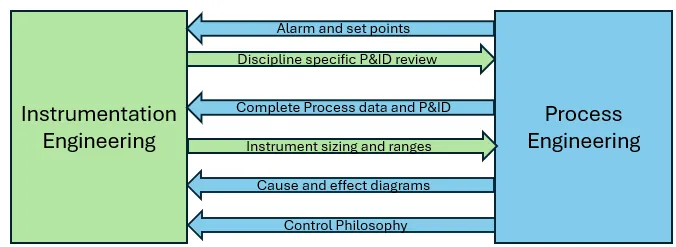
Connecting the Dots · Part 1 of 6 · The Range and Turndown Trap, signal representation on P&ID
Connecting the Dots – Part 1: Instrumentation Interfaces with Process Engineering
Connecting the Dots: Instrumentation Interfaces with Other Engineering Disciplines in Process Plant Projects
There is a famous riddle attributed to Ameer Khusro:
घोड़ा क्यों अड़ा? — फेरा नहीं।
रोटी क्यों जली? — फेरी नहीं।
(Why did the horse balk? Why did the roti burn? — It wasn’t turned over.)
In the same spirit:
Why did the instrument installation fail? — The interface was missed.
In process plant projects, effective instrumentation engineering coordination with other disciplines is essential for accurate design, smooth installation, and timely project execution. Gaps in instrumentation detail engineering interfaces can result in design conflicts, rework, and costly delays.
This blog series by Ryka Engineering Solutions explores six critical interfaces between Instrumentation and Process, Mechanical, Civil & Structural, Piping, Electrical, and Vendor Package disciplines, highlighting practical engineering challenges and coordination practices that support successful EPC project execution.
1. Process ↔ Instrumentation: The Range and Turndown Trap, signal representation on P&ID
A small change in process data can turn a correctly selected instrument into an unsuitable one. This is one of the most critical interfaces between Process and Instrumentation engineering in process plant projects.
Process engineering establishes the operating conditions and provides the process data required for instrument selection and sizing. Instrumentation engineers use these inputs to select suitable instruments, determine measurement ranges, perform sizing calculations, and prepare instrument datasheets.
However, process conditions can evolve throughout detailed engineering due to updated process simulations, changes in plant capacity, revised Heat and Material Balance (H&MB), and vendor package inputs. When these changes are not communicated and incorporated into instrumentation design in time, the consequences may extend beyond engineering documentation to procurement, installation, and commissioning.
Common Engineering Challenges
1. Flow Measurement: Range and Turndown
Flow instruments are often selected and sized using preliminary mass-balance data. As process conditions evolve, the minimum, normal, and maximum flow rates may change, affecting the required turndown and measurement accuracy. An instrument that initially appeared suitable may no longer provide the required performance across the revised operating range.
2. Gas Flow Measurement: Accuracy of Process Data
For gas flow applications, accurate process conditions are essential for reliable flow-element sizing. Changes in operating pressure, temperature, molecular weight, or compressibility can affect sizing calculations and measurement accuracy. The applicable base conditions and actual operating conditions must be clearly established.
3. Instrument Selection: Beyond Basic Process Data
Instrument selection often requires application-specific information beyond pressure, temperature, and flow rate. The required data depend on the instrument’s operating principle.
Examples include:
- Radar level transmitters: Dielectric properties of the process medium, where relevant to the measurement technology and application.
- Magnetic flow meters: Electrical conductivity of the fluid.
- Averaging Pitot tubes: Fluid density, viscosity, and other relevant flow conditions.
- Thermowells: Process conditions, fluid properties, pressure, temperature, and mechanical design requirements.
Missing application-specific data can lead to unsuitable instrument selection or incomplete sizing calculations.
4. Pressure and Temperature Transmitters: Verify Before Procurement
Instrument ranges are sometimes carried forward from previous projects because the process conditions appear similar. However, even relatively small changes in the current H&MB can affect the suitability of the selected range.
Pressure and temperature transmitter ranges should therefore be verified against the latest approved process data before procurement, rather than relying on previously used values.
5. Control Valve Sizing: Minimum, Normal, and Maximum Operating Cases
Control valve sizing requires careful evaluation of the relevant operating cases, including minimum, normal, and maximum flow rates, with corresponding upstream and downstream pressures.
Accurate fluid properties, including density, viscosity, vapour pressure, and critical pressure, where applicable, are essential for evaluating valve performance and assessing the potential for cavitation, flashing, and other operating limitations.
Incomplete or incorrect process inputs can result in unsuitable valve sizing or trim selection. These issues may become apparent only during commissioning, when correcting them can be expensive and time-consuming.
6. P&ID Review: Legends, Symbols, and Instrumentation signal Requirements
Piping and Instrumentation Diagrams (P&IDs) form a critical interface between Process and Instrumentation engineering. Legends, symbols, abbreviations, signals, and associated notes must be reviewed for consistency with the current project requirements.
Carrying forward P&ID legends from previous projects without adequate verification can introduce ambiguities or omissions in instrumentation and automation requirements. These gaps may result in missed signals, incorrect interfaces, design rework, and commissioning difficulties.
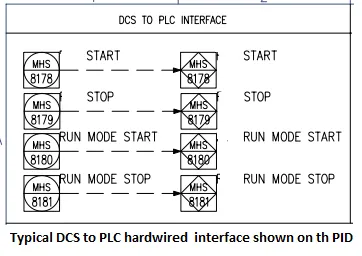
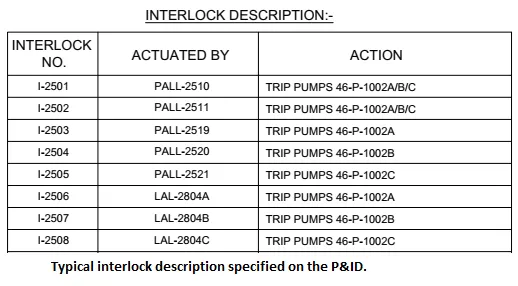
Instrumentation requirements identified through P&ID notes, interlock description and process datasheets must be carefully reviewed and reflected in the final instrument selection, sizing, and documentation.
Why Do These Interface Issues Occur?
Process simulations and design inputs may continue to evolve late into the engineering stage, incorporating changes in process requirements and vendor package information. Meanwhile, instrumentation datasheets often need to be issued early to meet procurement schedules and vendor lead times.
This creates a potential mismatch between evolving process requirements and instrumentation documents already released for procurement.
The solution lies in effective interface management, clear responsibility for communicating changes, and timely assessment of their impact on instrumentation design.
Any revision to process data, H&MB, or P&IDs that affects instrumentation requirements needs to be clearly identified and communicated. A structured change-tracking system helps ensure that the impact on instrument selection, sizing, datasheets, and procurement is evaluated before the change results in a site problem.
What Is the Cost of Missing the Interface?
Unresolved Process–Instrumentation interfaces can lead to:
- Instrument re-ranging and recalibration at site.
- Additional signal cabling or associated installation modifications, where interface changes require them.
- Control valve trim changes or replacement.
- Revised instrument datasheets, purchase orders, and vendor documentation.
- Instrument replacement, commissioning delays, and additional project costs.
The actual impact depends on the nature and timing of the change. However, identifying discrepancies during engineering is generally preferable to resolving them after procurement or installation.
How Can the Process–Instrumentation Interface Be Managed Effectively?
1. Validate process inputs before instrument selection.
Ensure that the process information required for each instrument type and sizing calculation is available and sufficiently established.
2. Review instrument sizing at defined engineering milestones.
Instrument ranging and sizing should not be treated as one-time activities completed when the datasheet is first issued. Revalidate them against updated process data at appropriate PFD and P&ID revision milestones.
3. Establish a formal change-impact review.
Changes to process data or P&IDs after issue for design or procurement should trigger an assessment of their impact on instrument selection, sizing, ranges, datasheets, and vendor orders.
4. Coordinate before procurement.
Resolve outstanding technical queries and verify that the selected instrument remains suitable for the latest applicable process conditions before finalizing procurement, wherever project schedules permit.
5. Maintain document consistency and traceability.
Ensure that approved changes are incorporated into the relevant datasheets, calculations, instrument indexes, P&IDs, and other affected engineering documents. Clear revision identification and communication help prevent outdated information from being used.
Conclusion: Get the Process Data Right Before It Becomes a Site Problem
Effective Process–Instrumentation coordination is fundamental to reliable instrument selection, accurate sizing, and successful project execution.
At Ryka Engineering Solutions, our approach to instrumentation detail engineering emphasizes technical verification, interdisciplinary coordination, and disciplined change management to help identify interface issues early and minimize avoidable rework during procurement, installation, and commissioning.
The key principle is simple: instrument sizing is not complete merely because a datasheet has been issued; it is complete when the selected instrument remains suitable for the applicable process requirements and all relevant changes have been addressed.