
Connecting the Dots · Part 3 of 6 · Why Early Interface Coordination Matters
Connecting the Dots – Part 3: Instrumentation Interfaces with Civil and Structural (CSA) Engineering
Successful process plant engineering depends on effective coordination between Instrumentation and other engineering disciplines. As part of this technical article series, Connecting the Dots: Instrumentation Interfaces with Other Engineering Disciplines, Ryka Engineering Solutions explores critical engineering interfaces, common design and coordination challenges, their impact on project execution, and practical approaches to achieving integrated, efficient and reliable engineering solutions for process industries.
Introduction-
3. Instrumentation ↔ Civil & Structural: Why Early Interface Coordination Matters
Civil & Structural (CSA) Engineering is one of the critical interfaces for Instrumentation Engineering in process plant projects. As per typical project execution schedules, Civil & Structural Engineering often progresses ahead of several other disciplines to meet building, foundation and structural steel construction milestones.
However, many instrumentation requirements are finalized progressively during detailed engineering. These include control room and analyser room requirements, local panel and junction box locations, instrument air volume tank locations and loads, maintenance platforms for instrument accessibility, and structural provisions for heavy instruments and associated equipment.
If these requirements are not communicated to Civil & Structural Engineering at the appropriate stage, they can result in structural modifications, additional steel, engineering rework, construction delays and significant additional costs.
Therefore, Instrumentation–CSA interfaces need to be identified, communicated and reviewed proactively throughout the engineering lifecycle, rather than addressed only during the final design or construction stage.
What Goes Wrong?
1. Control Room and Analyser Room Requirements
Control room dimensions, building layout, cable entry locations, cable trenches, openings and other instrumentation-related requirements need to be communicated to Civil & Structural Engineering at an early stage.
Late finalization of control room requirements or changes in cable entry arrangements can lead to building layout revisions, additional openings, structural modifications and rework during construction.
2. Local Panels, Junction Boxes and Instrument Air Volume Tanks
Locations of local control panels, junction boxes (JBs) and instrument air volume tanks shall be coordinated with Civil & Structural Engineering.
Instrumentation may finalize equipment locations based on process requirements and operational accessibility without adequately verifying structural support provisions, foundation requirements, equipment loads and mounting arrangements.
This can result in additional structural supports, foundation modifications and installation difficulties at site.
3. Instrument Maintenance Platforms and Accessibility
Instrumentation requirements for maintenance platforms, access ladders and walkways need to be identified during the structural design stage.
Platforms designed only for general personnel access may not provide adequate working space for instrument installation, calibration, removal or replacement.
For example, instruments mounted at elevated locations, such as flare stacks and column tops, require specific maintenance clearances and equipment removal envelopes. If these are not considered during design, existing platforms may need costly modifications.
4. Cable Tray Routing and Structural Supports
Cable tray support arrangements, trench requirements shall be coordinated between Instrumentation, Electrical and Civil & Structural Engineering.
When cable tray supports are treated as a separate structural requirement rather than integrated into the overall structural support philosophy, additional steel structures, independent supports and unnecessary fabrication costs may arise.
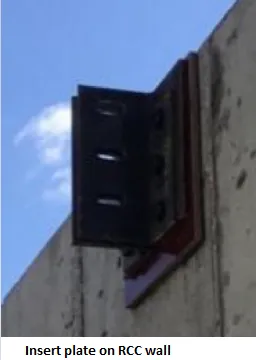
Early coordination helps optimize cable tray routing and integrate support arrangements with the main structural steel system and on RCC structure.
5. Instrument Air Header Routing and Structural Steel Coordination
Instrument air header routing is another important interface involving Instrumentation, Piping and Civil & Structural Engineering.
When instrument air distribution requirements and routing inputs are communicated at a later stage, structural steel may already have been designed, released or fabricated.
This can lead to routing clashes and field modifications, resulting in longer airline routes, additional bends and potential pressure drop, instead of the intended piping arrangement.
6. Structural Provisions for Instrument and Equipment Loads
Instrumentation-related equipment, including instrument air volume tanks, analyser shelters, local panels and other heavy equipment, may require dedicated foundations, structural supports or load-bearing provisions.
If equipment weights, operating loads, mounting arrangements and support requirements are not communicated during structural design, additional reinforcement or structural modifications may become necessary.
Why Does This Happen?
- Different engineering schedules: Civil & Structural Engineering often progresses ahead of Instrumentation to meet early construction and project milestones.
- Late instrumentation inputs: Instrument and junction box locations, panel dimensions, equipment weights, mounting arrangements and maintenance requirements are finalized progressively during detailed engineering.
- Incomplete preliminary information: Even when final instrumentation data is unavailable, preliminary requirements and estimated loads are not always communicated to Civil & Structural Engineering.
- Discipline-wise design approach: Instrumentation, Piping, Electrical and Civil & Structural teams may develop their respective layouts independently without adequate interdisciplinary reviews.
- Delayed 3D model reviews: Access requirements, structural clearances, cable tray supports and instrument maintenance envelopes may not be adequately checked before structural steel fabrication.
By the time the final instrumentation requirements become available, structural drawings may already be approved or steel fabrication may have commenced, making modifications difficult, time-consuming and expensive.
Cost and Schedule Impact
Late identification of Instrumentation–CSA interface requirements can result in:
- Structural steel modifications and additional reinforcement.
- Changes to building layouts, cable trenches and wall openings.
- Additional foundations and equipment support structures.
- Fabrication of new maintenance platforms, ladders and walkways.
- Independent cable tray support structures and additional steel consumption.
- Site modifications, installation rework and construction delays.
- Additional engineering hours, material costs and project coordination efforts.
Early interdisciplinary coordination can significantly reduce these avoidable costs and schedule impacts.
How to Close the Interface Gap
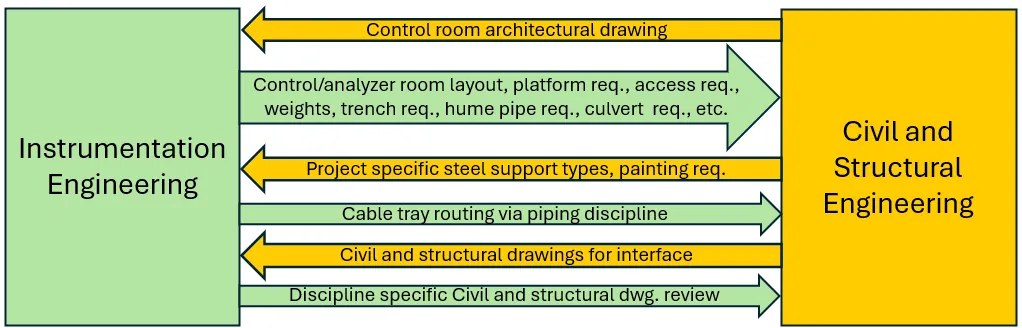
Effective Instrumentation–Civil & Structural coordination requires continuous information exchange and interdisciplinary reviews at every stage of engineering.
The following practices help minimize interface gaps:
- Communicate preliminary requirements early: Share preliminary control room and analyser room requirements, panel and junction box locations, equipment dimensions, estimated weights and mounting requirements with Civil & Structural Engineering, even when final data is not yet available.
- Establish an instrumentation interface requirement list: Identify all instrumentation-related civil and structural requirements, including foundations, equipment supports, cable entries, trenches, platforms and access arrangements.
- Review structural provisions jointly: Coordinate local panels, junction boxes, instrument air volume tanks and other instrumentation equipment locations with Civil & Structural Engineering to verify foundations, structural supports and load requirements.
- Coordinate cable tray support philosophy: Review cable tray routing and support arrangements jointly with Electrical and Civil & Structural Engineering to optimize structural steel utilization and avoid independent support systems wherever practical.
- Coordinate instrument air header routing: Involve Instrumentation, Piping and Civil & Structural teams during routing reviews to identify potential clashes before structural steel fabrication.
- Verify access and maintenance requirements: Review instrument accessibility, maintenance platforms, ladders, working clearances and instrument removal envelopes during 3D model reviews, rather than after platform fabrication.
- Update and reconfirm information at every stage: Track preliminary and final instrumentation inputs, communicate revisions and ensure that Civil & Structural Engineering incorporates the latest approved requirements before drawings are released for construction or fabrication.
The Ryka Perspective
At Ryka Engineering Solutions, we recognize that Instrumentation Engineering is closely connected with Civil & Structural Engineering throughout process plant design and execution.
Successful engineering coordination is not limited to issuing final drawings. It involves identifying interface requirements early, communicating preliminary inputs, reviewing design developments and ensuring that discipline-specific requirements are incorporated into the overall engineering design.
Proactive interface coordination today prevents structural rework tomorrow.